← Back to Tip Top Fitness

Form guides

Train with better form.

Small setup changes can make an exercise feel very different. Learn what changes, why it matters, and a practical cue to try in your next workout.

The weekly coaching note

One detail worth knowing.

Visual explanations you can save or share. These short app-site notes link to the full instructions and research on our Santa Barbara coaching site.

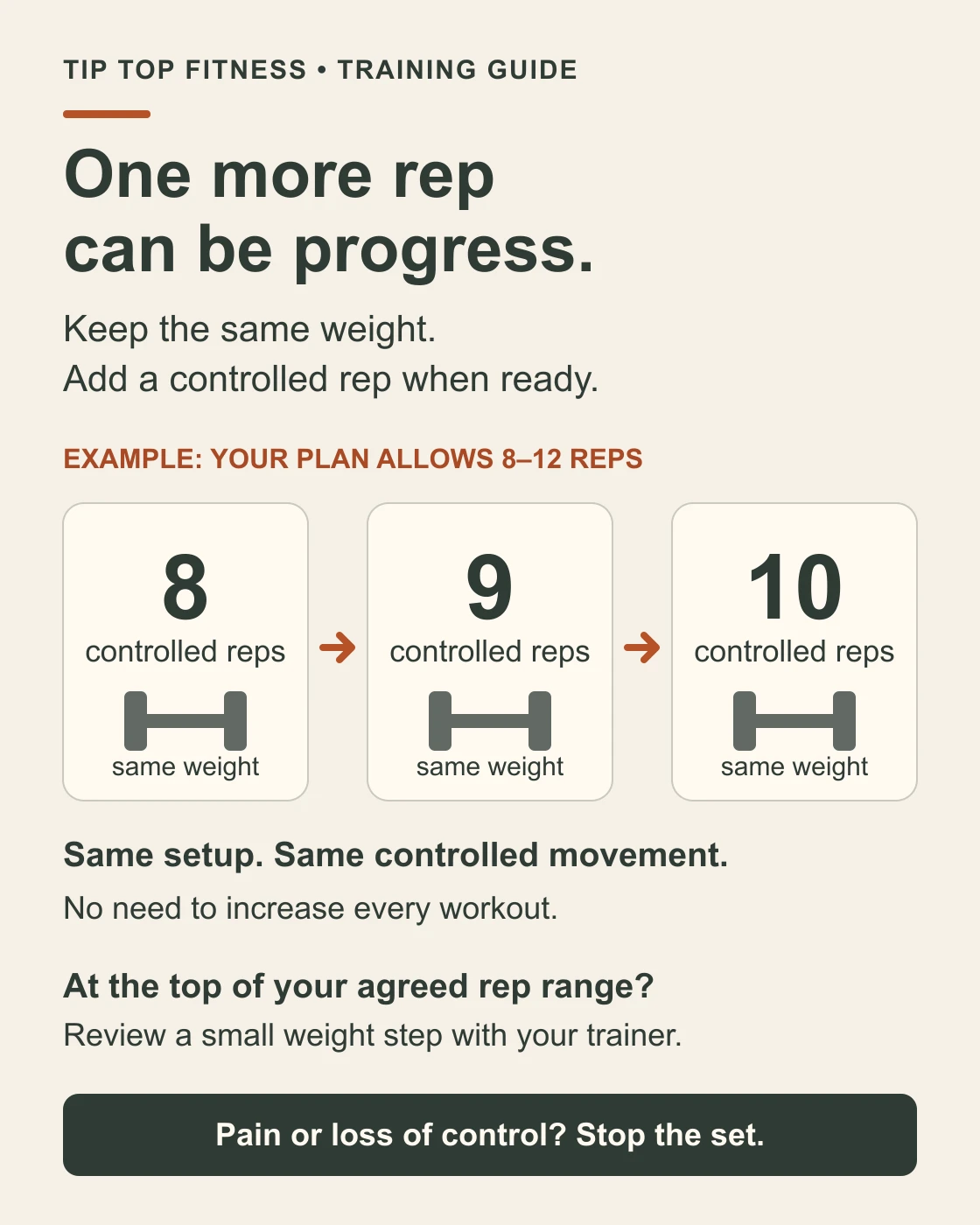
Progression diagram showing the same dumbbell with eight, nine and ten controlled repetitions when ready within an example eight-to-twelve-rep plan. Keep setup and form consistent, review a small weight step at the top of the range, and stop for pain or loss of control.
AI-assisted diagram with example repetition counts, not measured study results or a prescribed routine. The full guide links the primary trial, its supervised-training limits and gradual-progression guidance. AI-generated educational illustration; tap to enlarge.

Progress can be one more controlled rep

When the resistance stays the same, a well-controlled extra repetition can be a progression. Keep a simple record alongside your Tip Top Fitness sessions: exercise setup, resistance, repetitions and how the set felt. Compare like with like, and use a range agreed for your current ability rather than forcing a heavier weight every workout.

Try this: Within your agreed rep range, add a repetition only when you can keep the setup and movement controlled. Repeating the same count is fine; stop for pain, dizziness or loss of control and ask for individual guidance when needed.

Read the full guide and sources →
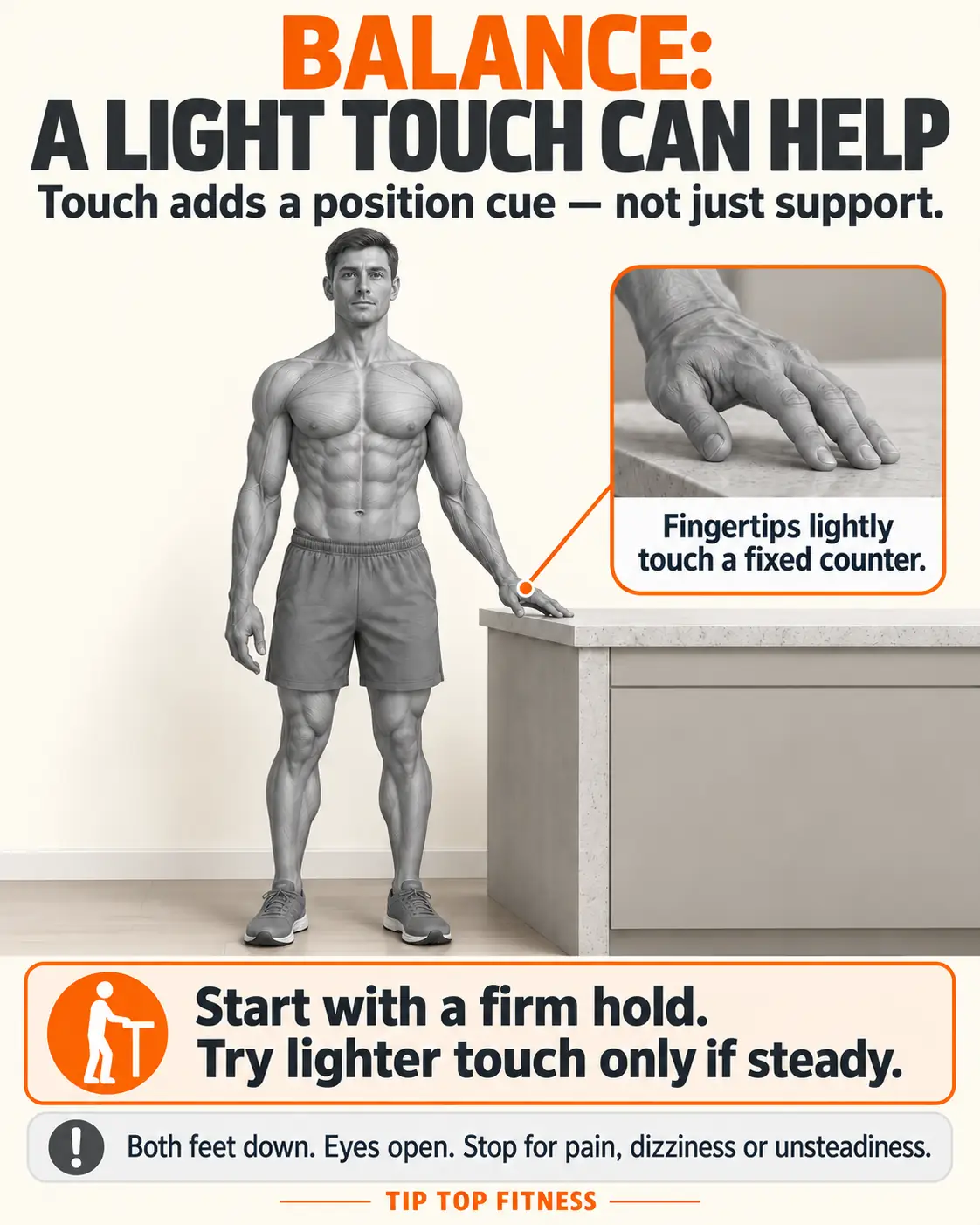
Gray anatomical model stands with both feet flat and eyes open beside a fixed counter, with a close-up of fingertip contact. Text explains the position cue and advises firm support whenever needed.
Touch can add sensory information as well as physical help. This two-foot illustration is not the narrow laboratory test stance or a promise of fall prevention; the full guide links the primary research and its limits. AI-generated educational illustration; tap to enlarge.

Balance practice: touch is more than support

Your balance work does not have to begin hands-free. Light contact on a fixed surface can add a position cue even when you are not leaning on it. This coaching note explains why support changes the task, and why a firmer hold is still the right choice whenever you need it.

Try this: Keep both feet flat, eyes open and a stable counter within easy reach. Start with a firm hold; only try lighter contact if already steady, and stop for pain, dizziness or unsteadiness.

Read the full guide and sources →
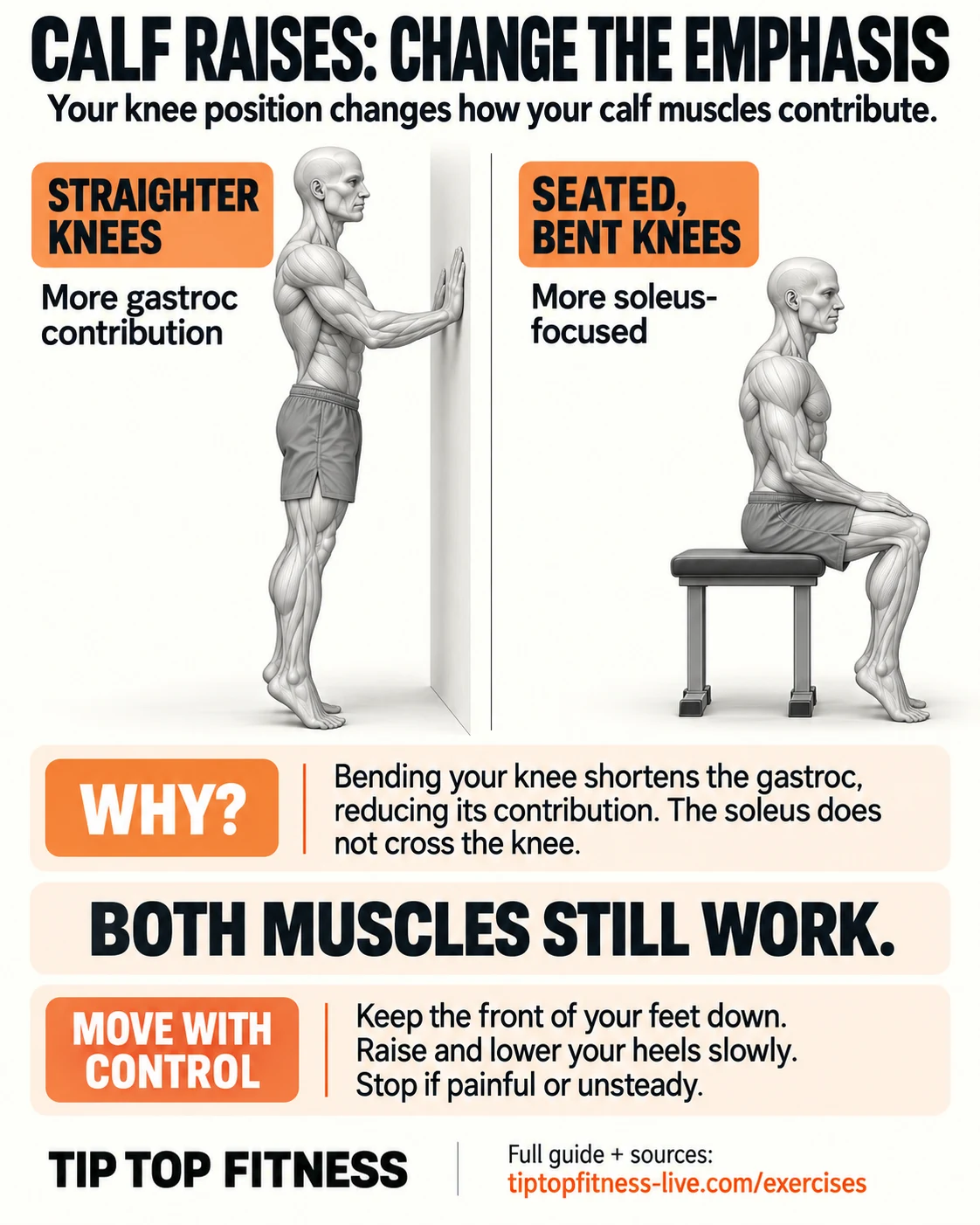
Calf-raise infographic comparing supported standing with straighter knees and a seated bent-knee raise: more gastroc contribution versus a relatively soleus-focused position. Both muscles still work. Keep forefeet down, move slowly and stop if painful or unsteady.
Standing and seated positions change relative calf-muscle emphasis. These unloaded illustrations explain the setup, not a matched-load study or measured activation map. The full guide separates activation from long-term growth findings. AI-generated educational illustration; tap to enlarge.

Calf raises: your knee changes the exercise

Straighter knees allow more gastrocnemius (gastroc) contribution. Seated bent-knee raises are relatively more soleus-focused, because the gastroc shortens when the knee bends. Both muscles still work; relative emphasis is not soleus isolation or a promise of more soleus growth.

Try this: Use stable hand support when standing or a firm, stable seat when seated. Keep the front of your feet down, lift and lower your heels slowly, and stop if painful or unsteady.

Read the full guide and sources →
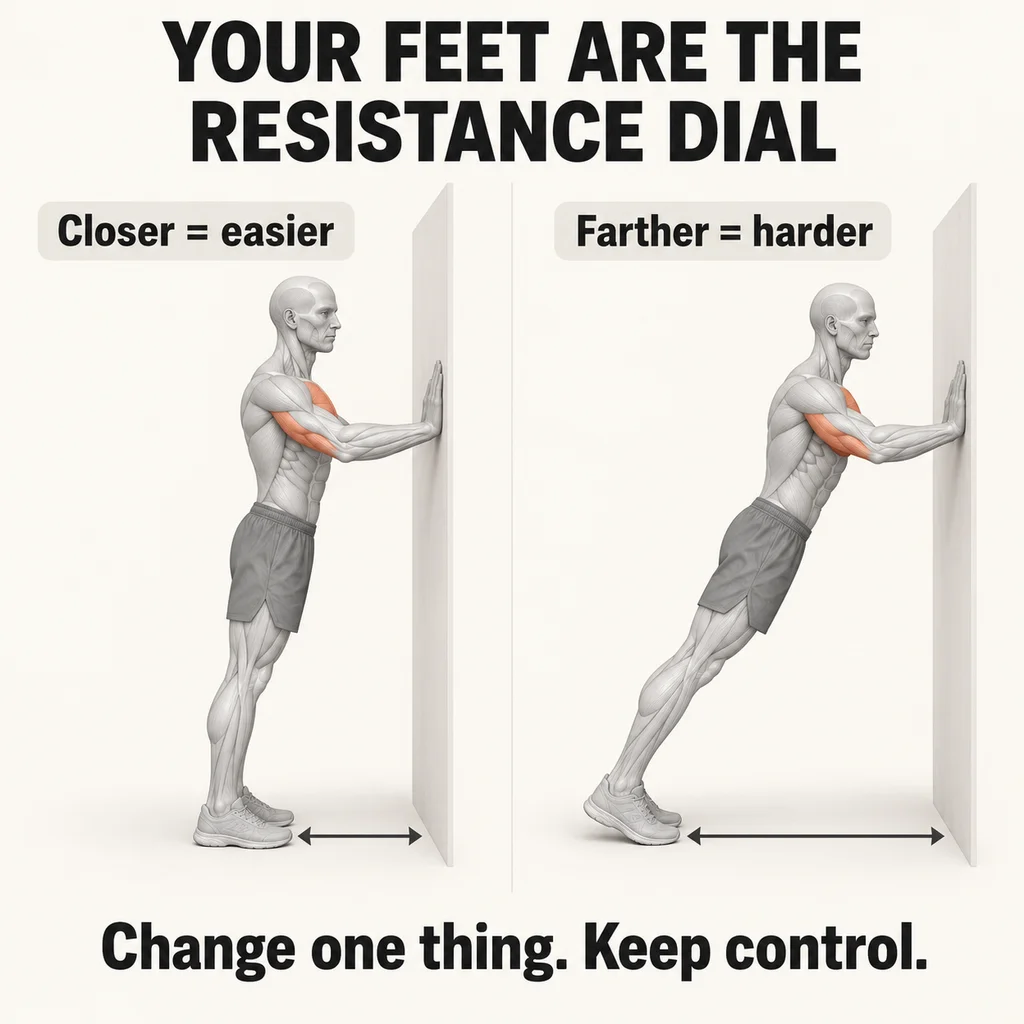
Side-by-side anatomical illustrations of wall push-ups with the feet closer to and farther from the wall.
Compare foot distance while keeping the wall and hand position consistent. This diagram does not assign a body-weight percentage to either position. AI-generated educational illustration; tap to enlarge.

Wall push-ups: your feet are the resistance dial

A wall push-up can be more than a beginner substitute. Where you stand changes the challenge, so foot distance gives you a simple way to adjust the same movement without adding equipment.

Try this: Begin close to the wall. Keep your body moving as one unit and change the distance in small steps while staying in control.

Read the full guide and sources →
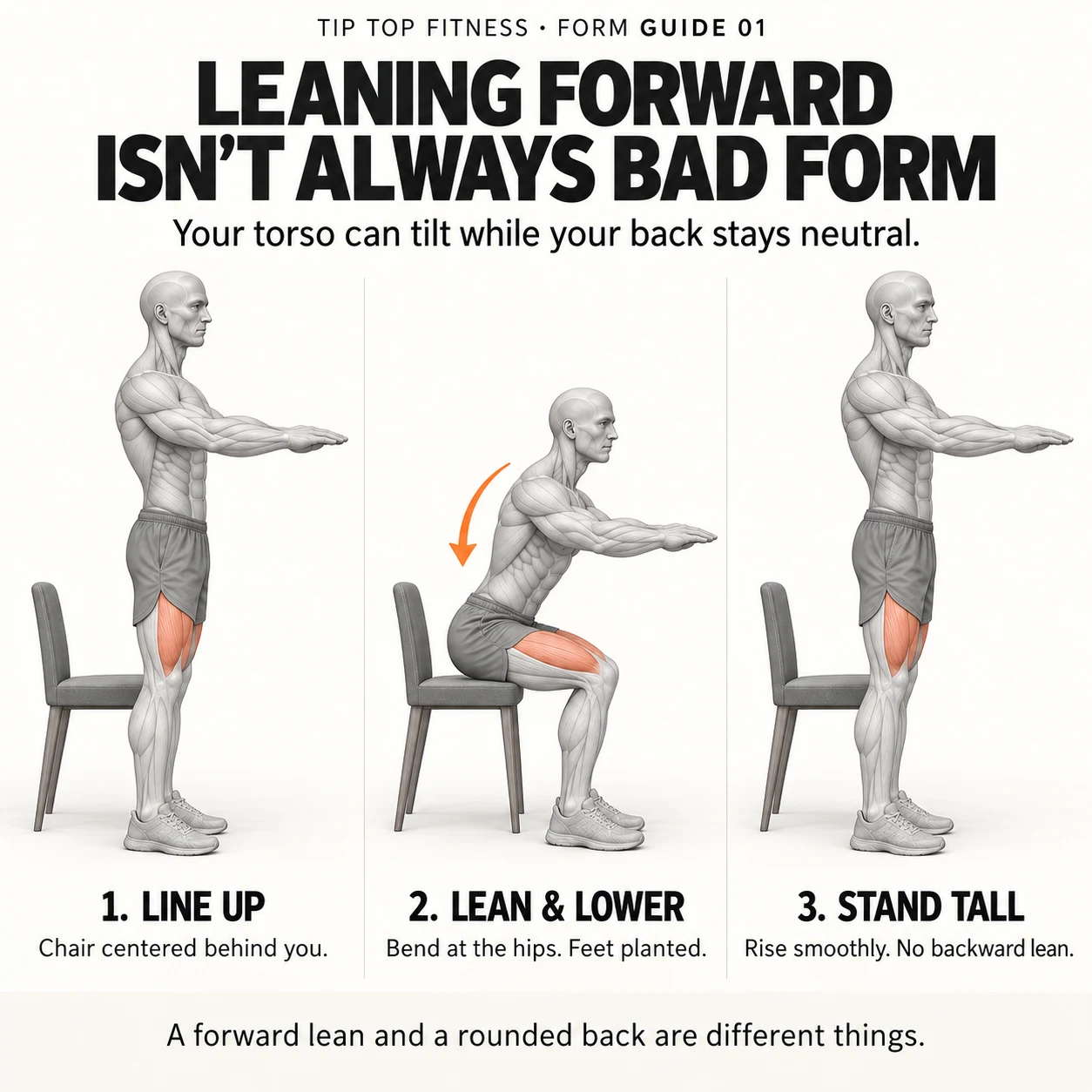
Three anatomical views of a chair squat with a stable chair centered behind the person in the standing, seated-contact and standing positions.
The chair stays centered behind the body throughout the movement. A forward torso lean is different from slumping. AI-generated educational illustration; tap to enlarge.

Chair squats: leaning forward is not always bad form

Leaning your torso forward is not the same as collapsing your back. A controlled forward lean can be part of standing up from a chair; the useful question is whether you can move comfortably and stay balanced.

Try this: Use a stable chair against a wall, centered behind you. Reach your hips back with control and stand without dropping onto the seat.

Read the full guide and sources →

General exercise education, not an individual assessment. Stop if an exercise causes pain or you feel unwell.

Bring the idea into your training.

Explore Tip Top Fitness and its guided workouts. These free notes are useful on their own—you do not need the app to use them.

Explore the Tip Top Fitness app →

The movement library